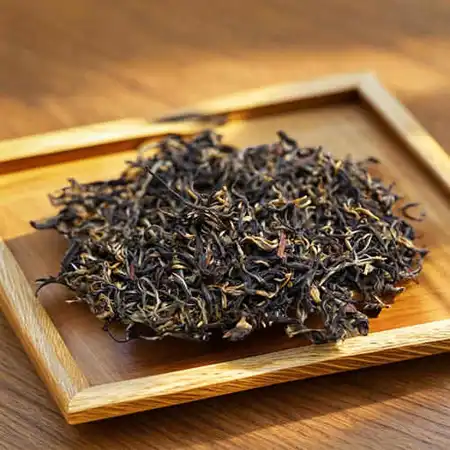
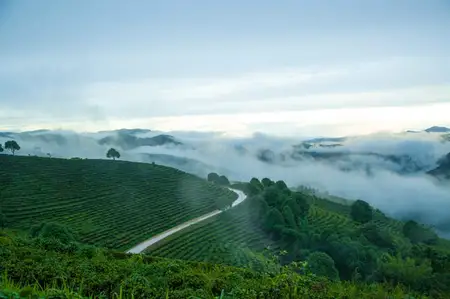
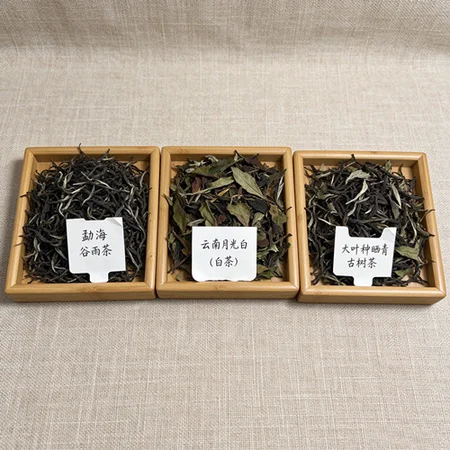
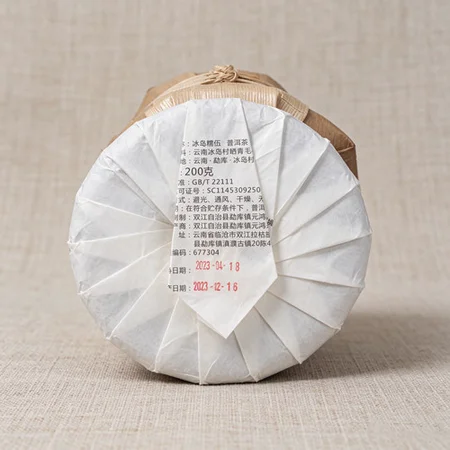
Pu'er tea from Yunnan, China, is made from sun-cured Yunnan large-leaf tea within the geographical indication protection scope, and is processed using specific techniques within the same scope, resulting in tea with unique quality characteristics. Based on its processing techniques and quality characteristics, Pu'er tea is divided into two types: Pu'er tea (raw tea) and Pu'er tea (cooked tea).
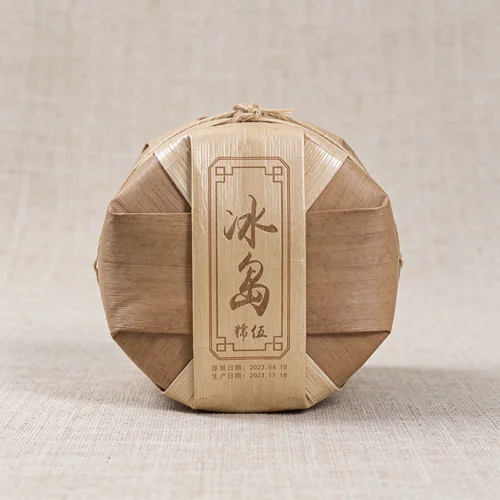
According to research, the tea from Yinsheng City is of the Yunnan large leaf tea variety, which is also known as Pu'er tea. Therefore, the tea produced in Yinsheng City should be considered the ancestor of Pu'er tea. In his book "Notes on Pu'er Tea," Ruan Fu of the Qing Dynasty stated, "Pu'er was originally part of Yinsheng Prefecture. Thus, the use of Pu'er by the western Tibetans dates back to the Tang Dynasty." In the Song Dynasty, Li Shi also recorded in his book "Xu Bo Wu Zhi" that "tea comes from the mountains of Yinsheng. It can be collected at any time and brewed with beans and ginger."
During the Yuan Dynasty, there was a place named "Buri Department", which was later written in Chinese characters as "Pu'er" (with no three-dot water sign after "er"). The term "Pu'er" first appeared here, and since then it has been officially recorded in history. Yunnan tea, which did not have a fixed name, was also called "Pu Cha" and gradually became a necessary commodity for market trading in regions such as Tibet and Xinjiang. The term "Pu Cha" also became famous both domestically and internationally, and it was not until the end of the Ming Dynasty that it was renamed Pu'er tea.